

The COMPOUNDRA Framework
Part II: Evaluating business quality, risk, and portfolio fit beyond the ticker.


In public markets, most conversations are about tickers, price targets and quarterly beats. What Compoundra tries to do is simpler and more fundamental: treat listed companies as evolving businesses and ask how robust their “compounding engine” really is over the next decade.
Compoundra is not a stock picker. It is a structured way to evaluate business quality.

Out tool was shaped by the way a handful of long‑term investors have looked at businesses for decades.
They rarely started from screens or backtests. They started from questions like:
“Is this a real business or just a story?”
An obsession with understanding the business model, the customer, and the cost structure before talking about multiples.“How does this company actually make and reinvest cash?”
A focus on free cash flow, returns on capital, and whether management deploys that capital in ways that increase value over the next 5–10 years.“What is the moat and how fragile is it?”
The idea of a durable competitive advantage: scale economies, network effects, switching costs, operating culture…not just brand, narrative, or hype.“What can kill this business?”
A clear view of structural risks: regulation, technology, energy, customer concentration, founder dependency, leverage, or any single point of failure.“Who should own this and for how long?”
The understanding that not every business fits every investor. Some are core compounders for a 10-year horizon; others are speculative options that deserve smaller position sizes.
What Compoundra does
Compoundra analyzes companies as operating businesses, not as regular symbols on the screen.
Instead of starting from “cheap vs expensive”, the framework forces you to look at customers, products, margins, balance sheet, incentives and bottlenecks in one honest view. The goal is not to guess the next quarter’s EPS, but to understand the durability and quality of the cash‑flow engine you are looking into.
At the practical level, it becomes a filter:
Which names deserve to be core positions?
Which are speculative satellites?
Which don’t belong in the portfolio at all?
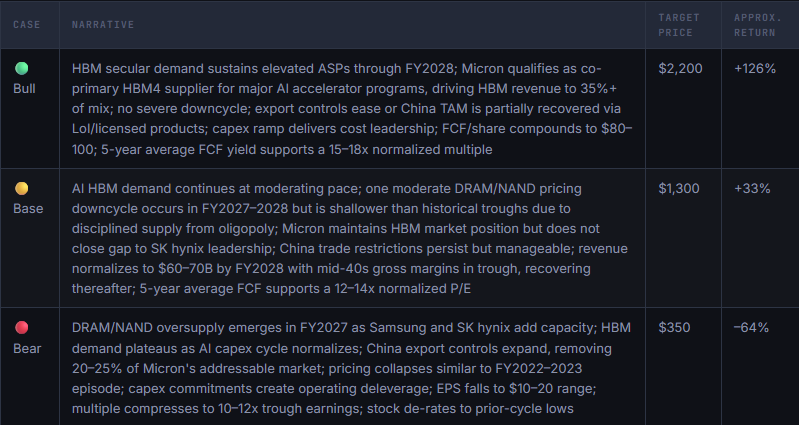
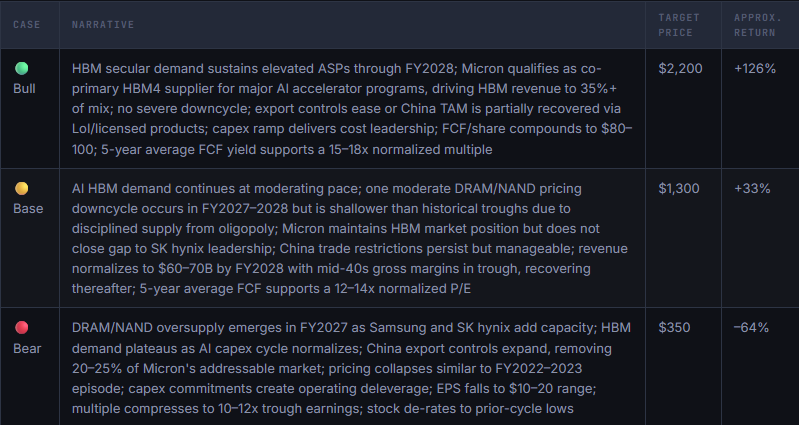
COMPOUNDRA´s Probable 5-Year Scenarios
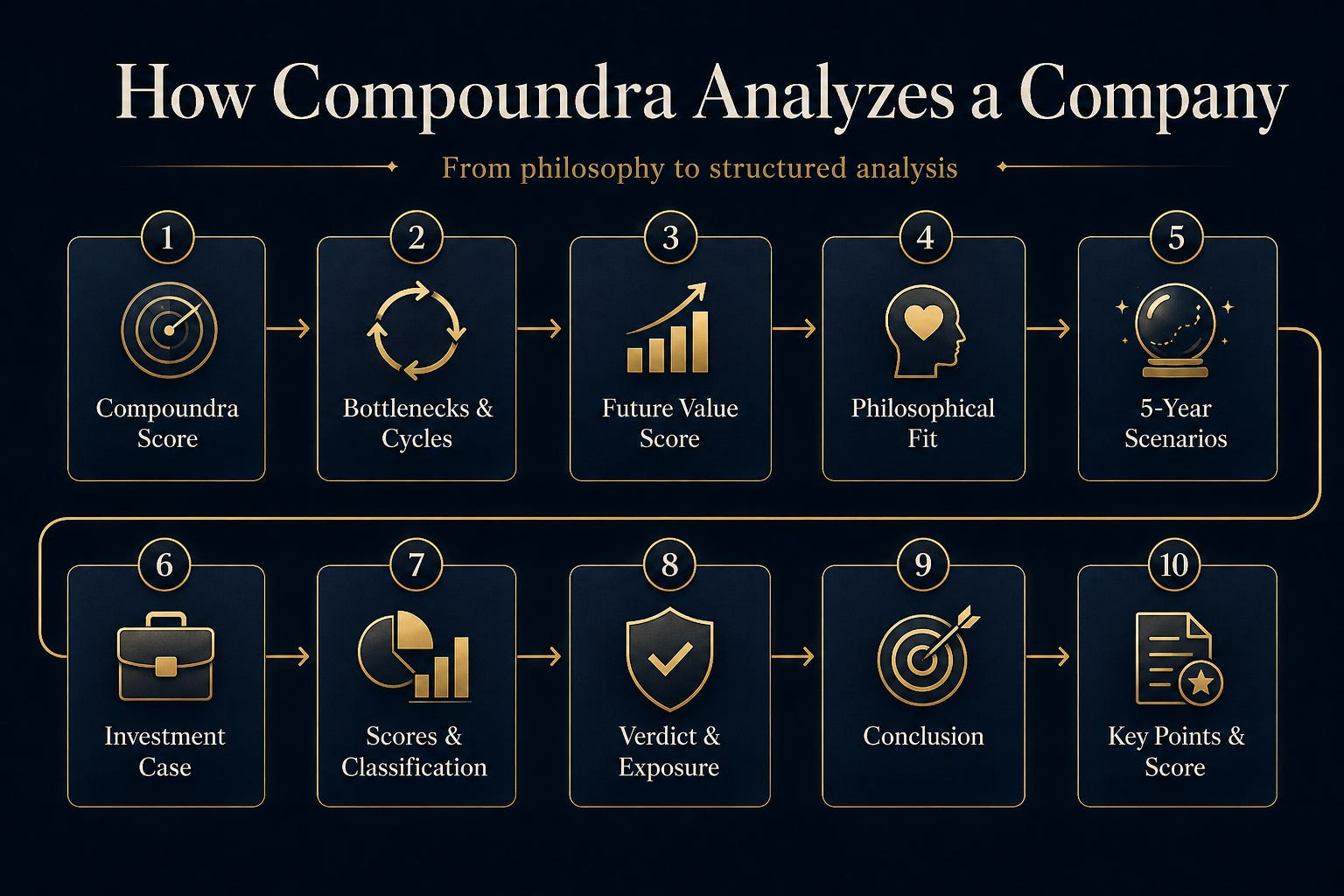
How the framework thinks
At its core, Compoundra is a quality‑and‑resilience lens for businesses. Markets are full of data, opinions, and noise. Compoundra exists to bring structure to that chaos: separating business quality from narrative, making risk and capital allocation explicit, and turning long-term judgment into clearer scores and tiers.
It looks through a few recurring questions:
Quality and moat: What actually makes this business hard to replicate? Is the advantage based on something structural (network effects, switching costs, scale economics) or in something fragile (brand, hype, low rates)?
Financial strength: How much real free cash does the company generate? How much debt does it carry? And could it survive a difficult period?
Capital allocation: When the business generates cash, what does management do with it? Does it make great decisions, average decisions, or poor decisions?
Risk and bottlenecks: Where can the system break? Technology, regulation, energy, talent, governance, demand cycles…every business has one or two true bottlenecks that matter more than the rest.
Scenarios, not points: Instead of a single target price, Compoundra has bull, base and bear paths anchored in specific drivers (margins, growth rates, regulation, capex outcomes).
Long‑term compounding: Is this a 10‑year cash‑flow machine or a 2‑year story? Does the flywheel look stronger as it scales, or weaker?
All of this is designed to answer one practical question: should this business be a core compounder in a long‑term portfolio, or not?
See what COMPOUNDRA does for you:
What the framework produces
To make this thinking usable, Compoundra turns qualitative judgement into a set of scores and tags.
Each business gets:
Compoundra Score (0–100): A synthesized view of operating quality, financials, moat, macro/regulatory exposure and founder/management edge.
Future Value Score: How much long‑term value creation is realistically on the table given growth, margins and reinvestment opportunities.
Investor‑Fit score: Whether the business matches different investor profiles (long‑horizon, income‑seeking, risk‑averse, concentrated, etc.).
Tier classification: From Tier 1 core compounders (central long‑term holdings) down to speculative or “watchlist only” names.
Verdict: A simple action tag: accumulate, hold, trim, avoid, or “too early to size”.
Red flags and bottlenecks: Explicit statements of what can go wrong and what needs monitoring.
Five‑year scenarios: Bull, base and bear cases with narrative plus approximate return ranges, tied to specific variables.
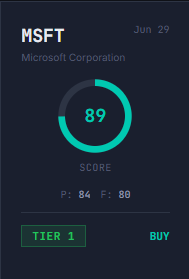
The scores are not meant to be “objective truth”. They are an attempt to compress a lot of business reality into a language that a portfolio can understand: size, horizon, conviction and risk.
Market‑agree compounders
Some businesses are widely recognized by the market as high‑quality compounders.
Think of large platforms like Amazon or Broadcom: scale moats, strong free cash flow, proven operating leverage and durable engines around infrastructure, semiconductors or software.
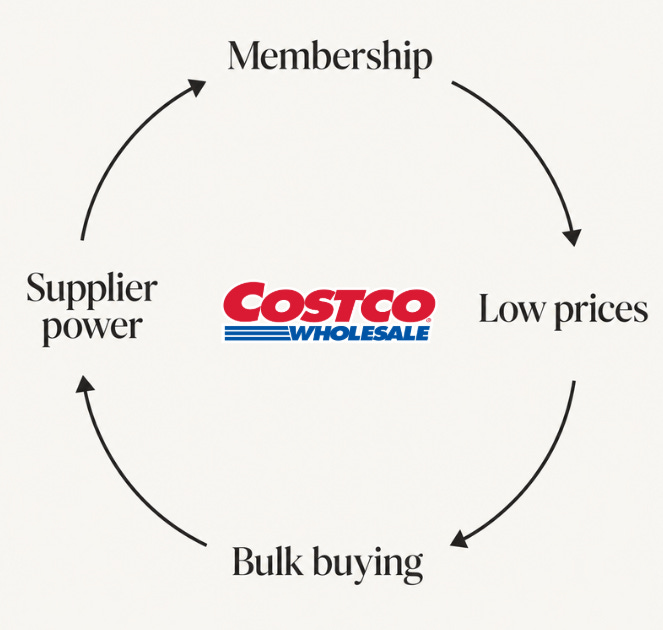
On these names, Compoundra often agrees with the market’s broad verdict, but adds structure:
It shows why they clear the bar for Tier 1 or Tier 2 status.
It quantifies how much of the thesis rests on present reality (margins, FCF, balance sheet) versus future promises (AI, new product waves, regulatory outcomes).
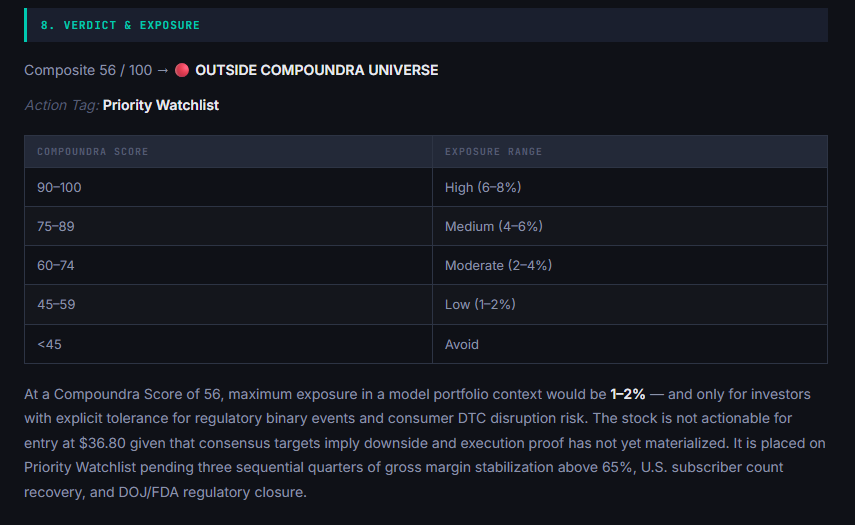
It translates that into suggested portfolio exposure: for example, an 8–12% position in a concentrated book vs. 4–7% in a more diversified one.
The message is simple: the framework is not contrarian for its own sake; it can validate consensus compounders when the underlying engine genuinely deserves it.
Narrative‑heavy stories
On the other side, there are names where the narrative arrives before the business reality: emerging platforms, new categories, ambitious technology or regulatory experiments.
Cases like $HIMS or $ASTS illustrate this tension:
Strong stories, ambitious projects, potentially large markets.
But with meaningful execution risk, regulatory dependency, capital intensity or weak current economics.
Here, Compoundra’s role is different:
It surfaces the gap between story and present fundamentals.
It tends to assign lower scores and more cautious tiers, framing these as speculative or “option‑like” positions rather than core compounders.
It emphasizes red flags and scenario tails more than in the mature compounders.
By putting both types of names in the same language (scores, tiers, scenarios) the framework helps investors avoid treating all “interesting” businesses as if they were equally ready for core exposure.
See Compoundra in action
Alongside this article, the first Compoundra reports are being released as standalone PDFs.
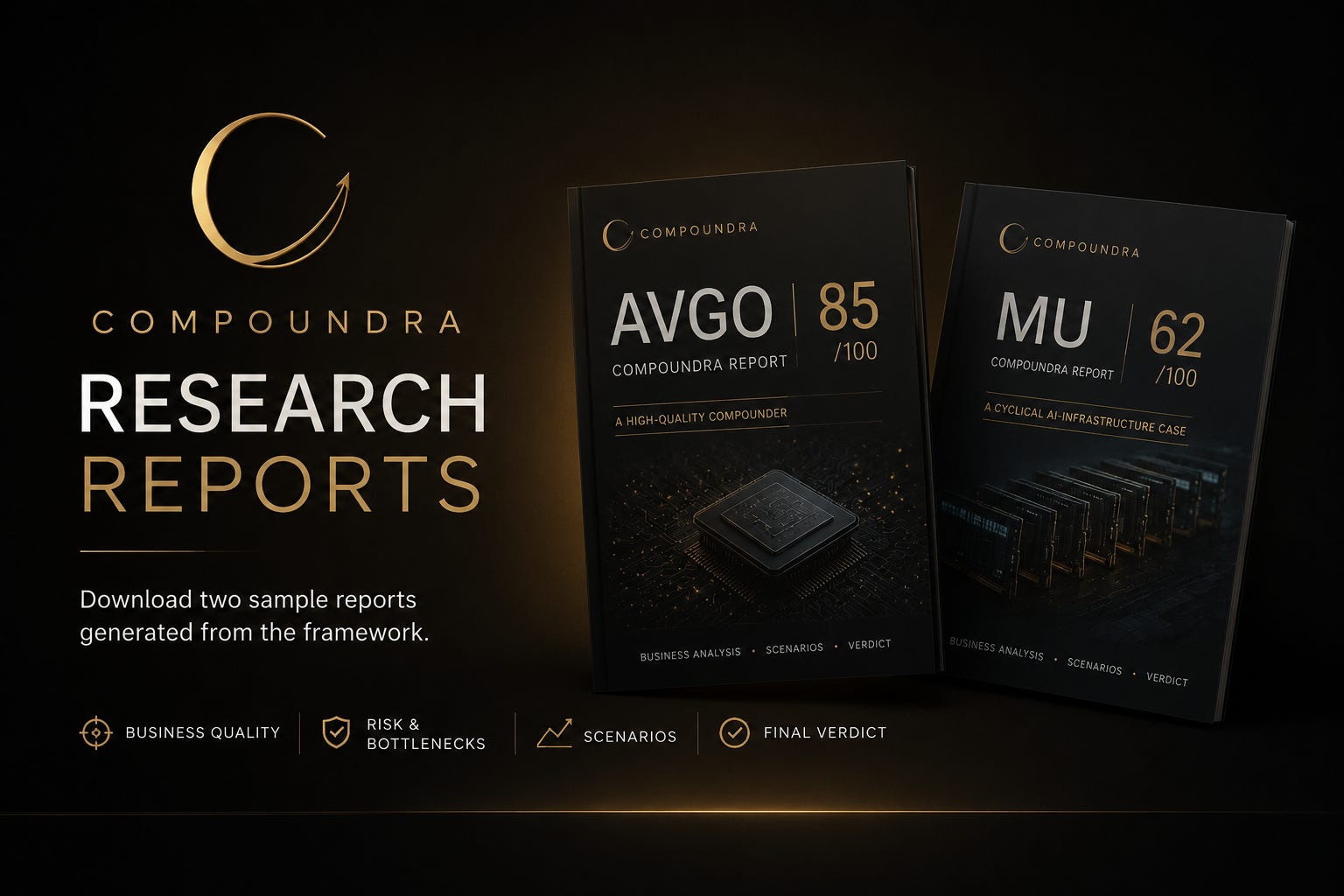
AVGO: a high-quality compounder case: a business with strong cash generation, deep customer relationships, AI infrastructure exposure, and disciplined capital allocation. In Compoundra, this is the type of company that can qualify as a long-term core compounder
MU: a cyclical AI-infrastructure case: a business with real exposure to AI memory demand and HBM growth, but still tied to pricing cycles, capex discipline, and the volatility of the semiconductor memory market. Here, the score reflects both the opportunity and the cyclicality behind the story.

Each PDF follows the same structure: scorecard, bottlenecks, secular curves, scenarios, investor fit, strengths, risks, red flags, and a final verdict.
The idea is simple: these reports are the lab notebooks of the framework: serious enough for deep research, but readable enough to understand why a company scores well, poorly, or somewhere in between.
Next steps: early access and feedback
Compoundra is still early.
The scoring rules are being refined, stress‑tested across sectors and updated as new data and cases arrive. Reports will evolve; scores will move; some theses will break and others will be reinforced.
If you want:
early access to new reports,
to suggest names to put through the framework, or
to stress‑test Compoundra against your own process,
you can join the waitlist / share feedback. The goal is straightforward: to build a business‑first lens that long‑term investors actually use in real portfolios, not just a concept on paper.
This is not investment advice. It is an invitation to look at public companies as real, evolving systems; and to make portfolio decisions based on the quality of those systems, not just the volatility of their tickers.
More coming very soon. Your feedback is truly appreciated!
Disclaimer: All content published on this Substack reflects my personal views and analytical process for informational and educational purposes only. Nothing here constitutes investment advice, a financial recommendation, or a solicitation to buy, sell, or hold any security or financial instrument. All investing involves risk, including the possible loss of principal. Past performance is not indicative of future results. Readers are solely responsible for their own investment decisions and should consult a licensed financial professional before acting on any information shared here. Any Compoundra examples, scores, reports, or outputs shown are research materials only and should not be interpreted as personalized recommendations or buy/sell signals. Compoundra is an independent research framework inspired by publicly available ideas from great investors, operators, books, shareholder letters, interviews, and investment writings. It is not affiliated with, endorsed by, sponsored by, or connected to ANY of the investors mentioned.
 | A guest post by
|
How might the Compoundra framework complement traditional valuation models by focusing on business durability rather than short-term metrics, especially in markets where volatility is high?